
Robotic-assisted surgery (RAS) is transforming the medical field, enabling increasingly precise and minimally invasive procedures.
According to a Global Market Insight report published in July 2024, the global surgical robot market reached a value of $71 billion in 2023. In the United States approximately 644,000 robotic surgeries were performed in 2021, a number expected to exceed one million by 2028. The market is projected to grow at a compound annual growth rate (CAGR) of 161% between 2024 and 2032.
Several factors are driving this expansion:
- the growing adoption of Robotic Systems,
- the increasing number of surgical procedures,
- rising healthcare expenditures,
- the increase in chronic diseases.
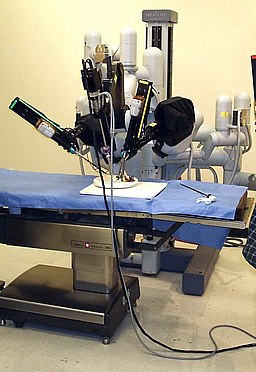
Robotic technologies offer significant advantages, especially for surgeries involving complex anatomical structures or requiring extreme precision. Thanks to Robotic Systems, patients experience better outcomes compared to traditional open surgery, such as fewer complications, reduced blood loss, and better preservation of surrounding tissues. These benefits translate into smaller incisions and less tissue trauma, which leads to shorter hospital stays, faster recovery times, and reduced postoperative pain. This also has a direct impact on healthcare costs, contributing to long-term savings.
Robotic platforms are used in a wide range of medical specialties, including cardiothoracic, gynecological, neurosurgical, orthopedic, urological, and oncological surgery. Procedures such as prostatectomy, hysterectomy, coronary artery bypass, and colectomy significantly benefit from the use of robotic surgery.
In this context, where robots enable surgeons to perform complex procedures with greater precision and control, optical systems play a crucial role. Tecnottica Consonni, manufacturer of precision Optics is at the forefront of developing and manufacturing precision optics, providing innovative solutions for Robotic Assisted Surgery (RAS) and minimally invasive surgery (R-MIS), thus contributing to the evolution of modern medicine.
Optical Systems for Robotic Assisted Surgery (RAS)
Robotic Assisted Surgery (RAS) is one of the most significant innovations in the Biomedical field, as it allows for highly precise and minimally invasive procedures. As such, it requires cutting-edge optical instruments capable of providing ultra-high-resolution and detailed images, allowing surgeons to clearly visualize even the finest details of tissues.
Key optical components used in RAS include:
- Precision Optics designed to deliver sharp, distortion-free images integrated into viewers, endoscopes, and laparoscopes, providing direct visualization of the surgical field.
- Advanced imaging systems (4K and beyond) that offer high resolutions, such as 4K and 8K, enhance image quality by providing highly detailed information, crucial for accurate surgical execution.
- Ultra-high-definition cameras mounted on robotic arms that capture and transmit real-time images, offering surgeons a crystal-clear view during operations. This is especially important for minimally invasive procedures, where high-resolution images make the difference in ensuring effective surgery.
- Optical sensor and eye-tracking systems that detect the surgeon’s eye movements, synchronizing the vision with the surgical field for greater operational fluidity. Additionally, they provide real-time visual feedback, improving perception and responsiveness during operations.
- High-definition 3D scanning vision systems that allow the creation of three-dimensional models of the surgical field, enhancing depth perception and offering an enlarged view of anatomical structures. The use of 3D viewers combined with 4K technology provides an immersive and detailed experience, essential for controlling the surgeon’s maneuvers.
Integration of Precision Optics in Imaging Systems
The precision Optics developed by Tecnottica Consonni are seamlessly integrated into 4K imaging systems, ensuring superior visual experiences during minimally invasive surgical procedures. The high resolution offered by 4K not only improves image quality but also enhances the depth of field, allowing for better tissue visibility. In laparoscopy and endoscopy, this improved visual accuracy enables surgeons to operate with millimeter precision, reducing the risk of errors and improving clinical outcomes.
In addition to 4K technology, 3D scanning systems and eye-tracking have become integral parts of robotic surgery. Eye-tracking, for example, connects the surgeon’s eye movements directly to the imaging devices, improving operational efficiency and enabling smoother monitoring of the surgical field. This system also allows the surgeon to naturally shift focus and receive real-time feedback on what is being observed.
Integration of Precision Optics in Sensors for RAS
Sensors are another critical component of surgical robotics, as they provide detailed information about tissue interactions during operations. Optical sensors integrated into RAS platforms monitor the real-time position of surgical instruments, detecting the pressure applied and contact with tissues. This is crucial to avoid accidental injuries and to ensure that each movement is performed with extreme care, especially in confined surgical environments.
Additionally, sensors provide tactile feedback to the surgeon, simulating the sensation that would be felt with the hands during a traditional procedure. This feedback is vital for safely handling scalpels, forceps, and other instruments, precisely adjusting the force applied across multiple axes of motion. The integration of these technologies allows surgeons to have greater control and perform extremely delicate maneuvers with maximum safety.
The use of precision optics, advanced sensors, and high-definition imaging systems in RAS has transformed the way surgeries are performed, significantly improving the quality, precision, and safety of operations.
Certifications and Health Standards, but More
In the Biomedical field, safety and regulatory compliance are essential to ensure the quality and reliability of Optics used in surgical applications. Each optic intended for use in robotic-assisted surgery systems or other medical procedures must adhere to strict certifications. Among these, ISO 13485 is the most relevant standard, as it governs the entire life cycle of medical devices, from design and development to production, installation, and technical support. Its application ensures that every stage of production complies with regulatory requirements to guarantee patient safety.
Material Traceability and Certifications
An essential aspect of compliance is the traceability of the materials used. Optics and lens coatings must be accompanied by certificates that attest to their safety and suitability for medical use. Every manufacturing process must adhere to strict cleaning and quality management protocols, ensuring that there are no contaminants or defects that could compromise the effectiveness of the Optics in surgical environments.
Detailed documentation of every step of the production process, including flowcharts describing each phase, is another essential requirement. This documentation not only ensures the traceability of each optical component but also demonstrates compliance with current regulatory requirements.
Quality Standards and Additional Certifications
In addition to ISO 13485, Tecnottica Consonni adheres to a range of other international standards to ensure the quality of its Optics and production processes. These include:
- ISO 9001: this standard pertains to quality management systems and ensures that all business processes are focused on customer satisfaction and continuous optimization. It serves as a foundation for other industry-specific certifications, such as ISO 13485.
- ISO 9211: this standard specifies the general characteristics of optics, the measurement methods, and the applicable quality control tests. It is essential for setting basic standards related to lens and coating properties.
- ISO 9022: it governs environmental testing for optical components, ensuring that they can withstand extreme environmental conditions such as humidity, temperature, and vibrations that may arise during surgical use.
- MIL-F-48616: another crucial standard for surface quality control of optics, it establishes the inspection method and allowable tolerances for detecting surface defects and imperfections, such as scratches, that could compromise lens functionality.
- ISO 14001: this certification pertains to environmental management and demonstrates Tecnottica Consonni’s commitment to minimizing the environmental impact of its production processes, ensuring operational sustainability.
Precision Optics must meet strict surface quality criteria to guarantee optimal performance and safety while adhering to the prevailing medical regulations. Tecnottica Consonni’s Quality Control department rigorously inspects every optical component throughout all stages of production to ensure compliance with international standards. In addition to manual inspections, automated measuring and testing tools are used to ensure maximum precision.
The integration of precision Optics into robotic surgery systems and technologies for minimally invasive interventions marks an important evolution in the medical field, helping to improve the safety, effectiveness, and precision of surgical procedures. Tecnottica Consonni, with its constant commitment to innovation and quality, positions itself as a strategic partner for companies developing advanced medical devices.
“Thanks to the expertise of our engineers, physicists, and specialized technicians, and our direct collaboration with our clients’ design teams, we are able to provide customized optical solutions that meet the highest standards of safety and compliance. From the initial concept to prototyping and large-scale production, we ensure that every optical component meets the specific needs of medical applications, helping to push the boundaries of technology and improve the quality of patient care”, said Angelo Fasoli, Chief Sales Officers at Tecnottica Consonni.
With meticulous attention to metrology, coating, and rigorous testing, Tecnottica Consonni not only delivers precision Optics but also ensures that every single optical element and complex optical group is perfectly aligned with international standards and industry expectations.
“In this way, we continue to support innovation in the field of robotic surgery, contributing to a future where advanced optical technology can further enhance clinical outcomes and improve patients’ quality of life”.
Image designed by Freepik